5 World Cup 2026 angles small creators can still own this week
This week's Creator Radar identifies five low-competition World Cup 2026 story angles for small creators: the Mexico-Korea friendship derby, immigrant safe-watch rooms, Scotland's school-bus convoy, Brazil's CazéTV rights shift, and the watch-access confusion gap.
The main feeds are already thick with goals, star injuries, and host-nation takes. The openings below sit one layer away from the match recap: fan rituals, safety logistics, creator-led broadcast shifts, and watch-access confusion. That is where smaller creators can still move faster than sports desks.
| Angle to own this week | Demand signal | Why it is still uncrowded | Best platform + format | Concrete title hook |
|---|---|---|---|---|
| Mexico-Korea friendship derby | NPR reported that Mexico and South Korea fans are reviving the "Coreano, hermano" bond before their June 18 match, while one explanatory X thread on the backstory drew 169,269 views by this run. 1 2 | Big outlets are treating it as a feel-good fan story. Few English-language creators are packaging it for K-pop, Mexican diaspora, and football-history audiences at the same time. | TikTok mini-doc, YouTube Shorts explainer, bilingual Instagram carousel | "Why Mexico Is Cheering for South Korea Before Playing Them" |
| No ICE in the Cup watch rooms | KERA verified a North Texas initiative with watch parties, legal consultations, preparedness kits, and a portable mural; France 24 also covered immigrant-fan fears around the tournament. 3 4 | Sports creators often avoid immigration-policy angles; political creators often miss the football context. The gap is a careful service piece, not a pundit rant. | Local TikTok service video, Instagram guide, community newsletter | "Where Immigrant Fans Can Watch the World Cup Without Feeling Alone" |
| Scotland's yellow school-bus invasion | GBH reported that more than 1,000 Scotland fans used dozens of rented school buses from Providence to Foxborough; a MassLive fan video from Boston had 26,031 YouTube views. 5 6 | The visual is strong, but most coverage stops at novelty. Creators can turn it into a logistics, fan-culture, and cost-hack story. | YouTube mini-doc, TikTok street interview, X photo thread | "How Scotland Fans Hacked World Cup Transport With Yellow School Buses" |
| CazéTV versus Globo in Brazil | AP reported that CazéTV has all 104 World Cup matches in Brazil while Globo has 55; a Portuguese-language YouTube analysis of the CazéTV shift had 7,350 views within a day. 7 8 | English creator-economy coverage is still treating this as a generic streaming story. The sharper angle is "a creator-led broadcaster beat legacy TV on rights depth." | LinkedIn creator-economy carousel, YouTube essay, podcast segment | "The Streamer Who Got More World Cup Games Than Globo" |
| The watch-access confusion funnel | Bango's June 11 survey says 41% of Americans do not know where they can watch the 2026 World Cup, and 18% plan to subscribe to a new service for the tournament. 9 | National publishers own broad "how to watch" SEO. Small creators can win by making city-, language-, and budget-specific viewing maps for one audience at a time. | Search-first blog post, YouTube utility video, newsletter checklist | "The Cheapest Legal Way to Watch Every World Cup Match in Your City" |
1. The Mexico-Korea friendship derby is a crossover audience, not just a chant
The phrase "Coreano, hermano" is useful because it already has a story arc. It began with South Korea helping Mexico survive the 2018 group stage, and NPR found the bond alive again as Mexico and South Korea prepare to meet in Guadalajara on June 18. The article is packed with creator-friendly characters: mixed Korean-Mexican families in Los Angeles, Koreatown watch parties, and fans hoping for a draw because they like both teams. 1
The demand side is visible. A single X thread retelling the 2018 origin story had 169,269 views, 2,683 likes, and 292 reposts. That is not huge by World Cup standards, but it is strong for a niche cultural-history explainer posted before the match. 2
The supply gap is language and audience packaging. Spanish-language football accounts will cover the match. K-pop accounts will recognize the Korean-culture hook. Very few will explain why Mexican fans, Korean diaspora fans, and casual football viewers should all care in the same 60-second video.
Best execution: open with the 2018 embassy scene, cut to the 2026 Guadalajara reunion, then end on the creator prompt: "Pick one friendship fixture, not one rivalry fixture, and make the audience choose the draw."
2. Safe-watch rooms are a service story hiding inside a sports story
KERA's North Texas reporting gives this angle concrete local detail: No ICE in the Cup organizers launched with a mural event in West Oak Cliff, scheduled a watch party for South Korea versus Mexico at Gustos Burger Bar in Fort Worth, and planned legal consultations, immigration-resource information, and preparedness kits. 3
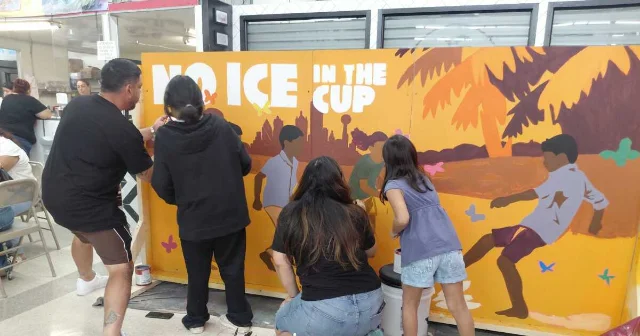
This is high-interest, but it needs restraint. The right creator format is a practical guide: where events are, what resources are on site, what attendees should bring, and which local organizations are involved. The wrong format is outrage bait.
The low-competition logic is simple. Most sports creators are trying to get closer to match footage. Most civic creators are not building around match calendars. A local bilingual creator can become the trusted viewing concierge for one immigrant community, which is more useful than another general World Cup opinion video.
Best execution: make a city-by-city "safe watch map" with dates, organizers, transit notes, and a plain-language legal-resource disclaimer. If you cannot verify an event page or organizer, leave it out.
3. Scotland's school buses are the fan-logistics story everyone can picture
GBH's school-bus piece has a clean visual hook: more than 1,000 Scotland supporters, dozens of yellow school buses, a 45-minute ride from Providence to Foxborough, kilts, flags, heat, songs, and a cheaper alternative to official transport. Organizers charged $38 per seat and directed funds toward transportation, drinks, water, and more than $16,000 in charitable donations, including $10,000 for Hasbro Children's Hospital. 5
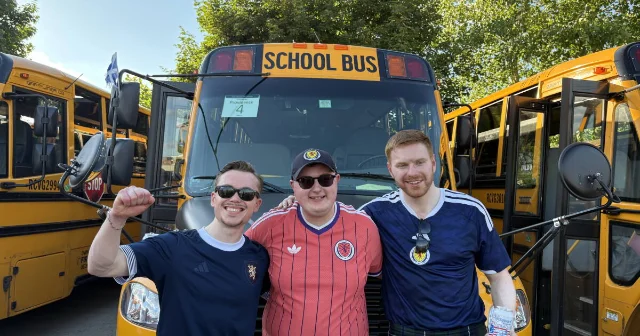
The demand signal extends beyond the article. A MassLive YouTube video of Scotland fans celebrating in Boston had 26,031 views and 337 likes, enough to show audience appetite for Tartan Army color even without deep analysis. 6
The supply gap is depth. Most clips will show bagpipes and kilts. A better creator piece asks: what does a travelling fan group do when official transport is expensive? Who organized the fleet? What did it cost per person? How did the charity component make the hack more than cheap travel?
Best execution: a three-part mini-doc: "the problem" (transport prices), "the hack" (school buses), "the culture" (why the convoy became part of the matchday memory).
4. CazéTV is the creator-economy story to cover instead of repeating YouTube's roster
The official YouTube creator roster is already known. The fresher platform angle is Brazil. AP reported that CazéTV, anchored by streamer Casimiro Miguel and LiveMode, is the only channel in Brazil with rights to all 104 World Cup matches; Globo, the long-running traditional broadcaster, has 55. 7
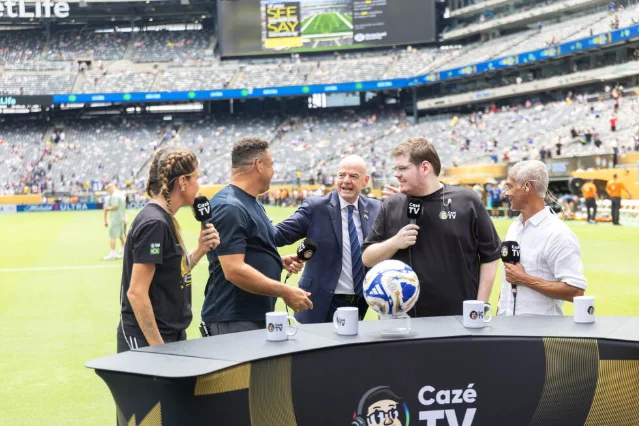
That is a cleaner story for creator-economy audiences than another list of official creators. It turns a vague claim, "creators matter now," into a measurable shift: rights depth, digital-first broadcast behavior, and fan participation inside the stream.
There is already platform-native demand in Portuguese. A June 16 YouTube analysis framing CazéTV's World Cup position against Globo logged 7,350 views, 1,023 likes, and 122 comments. 8 English-language analysis is thinner, especially for creators who want to understand how a streamer-led brand becomes infrastructure rather than commentary.
Best execution: make it a business teardown, not a personality profile. Compare 2022's 22 CazéTV matches with 2026's 104-match package, explain why community watch behavior can offset a less traditional broadcast feel, then ask what this means for local creator-led sports rights in other countries.
5. Watch-access confusion is a search product disguised as a content idea
Bango's survey is not a match story, but it is probably the most directly monetizable creator angle this week. It found that 41% of Americans do not know where they can watch the tournament, 18% plan to sign up for a new streaming service for it, and the subscription figure rises to 36% among Gen Z and 37% among Millennials. 9
The obvious version, "how to watch the World Cup," is crowded. The open lane is narrower: "how to watch if you are a Mexico fan in Dallas," "how to watch legally in Spanish without cable," "where to watch with kids in Boston," or "which subscription do you need for one team's group games?"
This is where small creators can beat publishers. They can build for one city, one language, one budget, or one team. They can update comments when a bar fills up or a platform changes its free window. They can turn the same research into a blog post for search, a Shorts version for quick answers, and a newsletter checklist for matchday reminders.
Best execution: choose one audience and one decision. Do not make a universal guide. Make the smallest useful guide and keep it current.
Fast action plan for this week
- Pick one angle with a clear audience. "Football fans" is too broad. "Korean-Mexican fans in L.A." or "Brazilian creator-economy watchers" is usable.
- Verify the local detail before filming. Watch parties, legal-resource events, transport plans, and public screenings change quickly.
- Lead with the problem, not the match. The best openings are: "where can we watch safely," "how do we get there cheaply," "why did a streamer get more games than TV," and "why are these rival fans hugging?"
- Publish in a native format. Utility guides should be searchable. Fan-culture stories should be visual. Creator-economy angles should be structured for LinkedIn and YouTube essays.
The open lane this week is not a better highlight package. It is explaining how fans are organizing around the tournament when tickets, rights, transport, safety, and identity all become part of the matchday story.
References
- 1NPR: 'Coreano Hermano'
- 2Anish Moonka thread
- 3KERA: safe spaces for World Cup viewing
- 4France 24: immigrant fans face ICE fears
- 5GBH: Scottish fans on school buses
- 6MassLive: Scotland fans in Boston
- 7AP: FIFA turns to influencers and streaming platforms
- 8Canal do Manel: CazéTV vs Globo analysis
- 9Bango: 41% of Americans do not know where to watch
Add more perspectives or context around this Post.